Structure or Spontaneity? What Actually Works for Therapists' Content, with Sarah Dosanjh
Do you need a perfectly planned-out content strategy to stay consistent? Or can you just show up, speak from the heart, and see what sticks?
In this episode, I'm joined by my brilliant friend and fellow therapist Sarah (aka The Binge Eating Therapist) as we get honest about how we each approach content creation — and how different those approaches are.
We’ve both been creating weekly content for year with blogs, podcasts, YouTube, and in this chat, we’re pulling back the curtain on:
- What actually helps us stay consistent (even when motivation dips)
- How we work with our personalities, not against them
- The real benefits of creating content beyond just “marketing”
- Why you don’t need a Trello board, a ring light, or perfect confidence to start
- And the surprising ways content has helped us grow as therapists and people, too
Whether you’re thinking about starting a blog, podcast, YouTube channel, or just want to share more consistently, this episode is here to remind you:
There’s no one “right” way to do this. You get to make it yours.
About Sarah
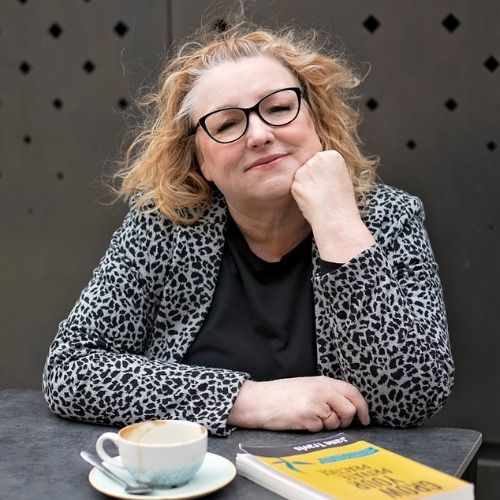
Sarah Dosanjh is a psychotherapist and author of the bestselling book I Can’t Stop Eating. After her own recovery from binge eating disorder she has gone on to specialise in helping others do the same. She has appeared on various media outlets such as BBC breakfast, Sky’s Roundtable and BBC Radio One, as well as amassing over 3 million views on YouTube.
Connect with Sarah:
Mentioned in this episode:
- Episode 225: The Armchair Test: The One Quiet Shift That Will Transform All Your Marketing
- Episode 226: “Would I Feel Safe With You?” How Clients Really Choose a Counsellor
- Framework First £9/month - Your one small step to easier blogging for counsellors
- And for more of my free and paid resources CLICK HERE
Transcript
Which is true, to be fair. Which is true. But what we're gonna talk about is we're gonna gonna 'cause both of us, do a podcast. Well, I do a blog and a podcast and you do a a podcast, and YouTube. And I just thought it might be worth us just having a chat because both of us have done this for a long time now.
Mm-hmm. and I think a lot of people might think it's a good idea, but they could never do it. So I wondered if we could talk about what it actually. How it, how it looks for us to both produce weekly content that goes out regularly, so, so, yeah.
[:And so if anyone's like looking, 'cause the, the, the challenge is, Jane, with you and I have been doing it for a long time, is people will listen to this and go, oh well they've been doing it forever. forgetting that. We had to start somewhere. And actually the expectations that we went into it with is probably helpful for people to know.
'cause they'll, they'll be in the same place.
[: [: [:So I just thought, right, I'm gonna do 12 episodes and then give myself permission that after doing 12 episodes, then I can stop. Because I thought if I really don't like it, then I've done it, I've tried it, and 12 episodes is given it a good old try. but as it was, it turns out I do like the sound
[:'cause with my podcast it said I'm gonna give it 10 episodes, I bow to you. Oh, well,
[: [:It still is on YouTube, but I can still be found more easily there than anywhere else. So that's, that's why I think YouTube has become as big and important for me.
[: [: [: [: [: [:You know, it's now like a little nugget of gold when they get an email for me because it's just as rare. so I think it's a personal preference, and this is one of the things I'd say to anybody who wants to do content is to figure out your personal preferences. My personal preference is to talk rather than to sit down and write.
And so that's probably a big part of why I went to something like YouTube. I was encouraged to do it. I'd wanted to do it before, and I'd actually started and quit after one video. And then when I decided to write a book, the, the company that I was using to help me write my book, they were really big on.
YouTube is a great place to promote your book because it's connected to Google. YouTube is a search engine as well, and it can turn up in Google searches. So that was what inspired me to go back again to YouTube. I think I'd always had it in my head I was going to, but the timing was to do with writing a book.
[:outta my comfort zone because, you know, there's, and also, self-confidence. 'cause I, I often have a fit. You, you know, I struggle with self-confidence and very often in my head there's like, why would anybody want to listen to this? You know, why would anybody bother listening to me? it's not, and what do I say to you when you say that?
[: [: [:That was doing this, that was helping other therapists to market their business. Why do people wanna listen to you? Because you've got an absolute shed ton of experience, and I'm absolutely marveled at you before I ever met you, when you had that Facebook group and you used to just hop on on a Monday morning, I think you called it Monday, motivation, and you just talked off the cuff.
This was before I was recording any videos, and I remember watching you in all thinking. How does she do that? How does she just turn up in front of the camera and a microphone and just talk to these people as if she's having a, having a chat with them? And, that's why it surprises me when you say to me now around not wanting to be on video and not wanting to talk because I've seen you do it off the cuff and there's a, a warmth and approachability.
It's your northern spirit. Spirit,
[:You just call up, he'd curl up in a little ball, don't you? So sometimes I feel great and I get out there and I can talk and other times I, it's like, you know, it's like walking through tl, but thank you. That's very kind of you to say that. I've lost my train of thought.
[: [:I prefer the kind of. I prefer writing so I can consider my words.
[:And then talking about it and because of course I work with binge eating day in, day out, when I have my bullet points, I can talk to that. 'cause I'm talking about this stuff all the time anyway. And I see it so often with counselors, as I'm sure you do as well, is they think they've got nothing to say.
Mm-hmm.
[: [:So on a Thursday morning, most of the time, I dunno what I'm gonna talk about until the morning when I'm actually gonna record, because part of my process is I need to feel connected to the topic, to be able to create a video. I just do, to be able to talk about it, to be interested enough in it as well.
So sometimes. I will have an idea earlier in the week and think that'll make a good YouTube video. Maybe I even jot down a couple of notes and I think I'm some kind of organized queen. And then I wake up on Thursday morning and I'm like, Nope, that's not it. So then when I've decided what I wanna write about, I sit in my rocking chair in front of my window, which is where I record.
'cause that's the first thing I say to anybody who wants to do videos. Don't buy lighting. Just sit in front of a window because that natural light just, you know, lights up your face. I sit in front of the window, with a pen and paper and I jot down a few thoughts, and I think about it. I think about what I'm gonna say, and I do some kind of very rough structure.
Sometimes these days I will use chat GPT to brainstorm with. There's no point for me using chat GPT to write anything because. I want it to be my voice and I want it to be my ideas, but sometimes I'll have written a few ideas and I'll put it into chat GBT, and they'll make a few suggestions and there's something that I'm like, oh yes, there's something it said there and I'd like to expand on that.
Then, I usually I get my phone out 'cause I just use my phone to record. If you've got a decent phone, you don't need to go, you don't need the camera equipment. if you've got an iPhone, put it on cinematic 'cause that makes the background just a tiny bit blurry and that makes you stand out. And it's a really nice, just gives a really nice quality to it.
And then I, I do like a little rehearsal and I will just talk my video aloud, which is normally about 15 minutes, something like that. And for me, there's something about talking out aloud before I then record myself talking out aloud. And often when I record myself talking it out aloud after I've just rehearsed it, I'm often surprised that it, it doesn't necessarily sound the same.
And I think there's something in the way that my brain works, that when I start talking about it and thinking about it, and then I record it, I'm ready to go. So all in all, probably from getting up. Sorry, from starting to think about it, sitting down at my chair, thinking about it and recording it, I'm probably done in an hour and a half.
There's editing to do after that, but that's usually it. And I wonder if people think they're supposed to have like Trello boards and schedules and all of that. If that's your personality, great. Do that. I'm not like that with anything, so why would I be like that With YouTube and much more spontaneous and much more, I'm interested in what I'm interested in.
I'm feeling passionate about whatever I'm feeling passionate about in the moment.and I like to infuse that because I think when you are talking and you are connected, emotionally connected to what you're saying, that's what makes it an engaging listener, an engaging watch. And then I, editing takes longer normally than recording it, couple of, couple of hours editing, thumbnail uploading.
So on a good day I can do it in half a day, which is most probably most of the time.
[:Because, I dunno, I just wonder what people think in their mind of how long it's gonna take people, whether that's, they consider that to be a quicker process or not.
[:Mm.so sometimes like where my self judgment or vulnerability will come in is I sometimes think I didn't take enough time and care, but I also know that by taking more time and care, I would probably lose something just in terms of my enthusiasm and available energy. I have to put on a, a YouTube video each week.
[:And you could have spent another hour just making the slightest little tweaks. And it wouldn't really matter.
[:There are videos that I've done that have probably. You know, if I were to, in the harshest way would be like the, almost like a vanity project. Like I just wanna talk about this thing. And my early videos were a lot like that. It wasn't really, I think 'cause the self-consciousness makes you so focused on what you are doing and how you come across that you forget that there is an audience that you are talking to that you would like to produce value for.
It's easy to get caught up. And so now thinking about how is it that I want people to feel. When they watch one of my videos, what are the points being much more, much clearer about the points that I want to make and emphasize and put across? 'cause it's very easy, especially with being on camera or talking when you're doing it off the cuff, to just sort of, ramble a bit through your own thoughts.
And I have definitely done that. And that's not to say I never do that. 'cause like you say, it doesn't have to be perfect. And there was one time when I saw. Something that someone had written on Reddit about me where they said, oh my goodness, I can't stand her videos. They're so unhelpful. I even listened to them on double speed and she doesn't say anything of interest and it actually makes me wanna binge more.
That's quite harsh review. Right. And at the time I remember thinking like, gosh, wow, okay. And I can see how someone would come to that conclusion. And when I sent that to Steph, who I do the podcast with. Steph said that she was very kind and she said back to me, some people like that, like they want to kind of see the meandering or the going this way and that way.
'cause it's quite orienting to be taken through this thought process to arrive rather than here's five tips about how to stop bing, bam, bam, bam, bam, bam. So I've kind of come to terms with that a bit, but I do have to remember. To try to be quite clear about what is it I want people to take away from this video.
[:And then there are others where it's just like, this is how you do this thing. And they're, they're both useful. You just need to know, you know, who is the person to go to for the thing that you want. There's no right or wrong, really, is there?
[:Yeah. So I think there's just a little bit about being thoughtful. If it is about meandering and this is what you want to do, then it's about being intentional about that. That's very different to when you are feeling unfocused and you kind of meander a bit. So there's nothing wrong with like taking people on a journey and wanting to take a longer route.
You don't always have to go straight to the point.but just having a few thoughts about like what it is that you are trying to. Put together for somebody.
[:That's one of the reasons how I do it. but for me, I, I have to have the key takeaway in my head of what do I want people to take from listening to this? What do I want people to go away thinking, all right, I've learned a thing, or I've understood something a bit better, or I've felt a bit inspired, or whatever it is.
Because otherwise it gets very Very muddy and you can end up just chatting and not really making any point. So you really do need to have a think about, right, what is the point of this? I think that's really helpful. But my process is very diff different to yours. So you get up on a Thursday and you just do it almost off the top of your head.
I don't do it like that at all. I'm a bit of an ideas machine. I spend most of my time having millions of ideas. So I find I write down, set all these ideas. I have a spreadsheet with like a a hundred or more on of ideas that I've thought of. And then when it is time to do my podcast. I do a podcast and blog don't. But when it is time to do that, I search through my list to find the one that would be appropriate for, for that time. Or I dunno, I'd just search for one and then I'd do that. so I do my podcast and then it has to go off to the editor. So that means I have to get it done in a timely way.
And because I've committed to always do it, you know, always being published on a Thursday, then I know when I need to start thinking about it, when I need to get it recorded, when I need to get it to my editor. But the way that I do it. I'd love to be able to just have a bullet pointed list and then talk through it.
And it's like you say, it's not that I don't know these things, you know, I did used to do these things like just, just live every week. But when you're being recorded, I feel it. It puts you under a little bit more pressure because people are. Properly listening to what is said, and they could rewind it and listen again and think, oh, what is she on about?
So for me, just having a bullet pointed list and then trying to talk through it, I can't do it. I ramble too much and because I haven't got a very good memory, I can literally not remember the thing that I've just been talking about. And then I think, well, did I say that? Did I imagine it? So I tend to script it, so it's not necessarily scripted word for word, but I do tend to script it and then I'll read it out.
And I hope it doesn't sound too much like I'm reading out, but for me. That works for me. Does that take me any longer? Possibly. But because mine's gonna be turned into a blog and a podcast, it needs to be written anyway. So it's basically, I write a blog and then I, I kind of read it out and, you know, have it recorded.
So it's not nec it's not really taking me any longer. so that's my process. So my process is far more, Far less on the hoof. Is it on the hoof? Is that the right term?
[: [: [:I think for the listener and for the whoever's consuming your podcast. This is why I think there is such a place for both. Both just offer very different things. And again, for any counselors or therapists listening who want to get into this a bit more, I think it really is going like, okay, what is, what's my way, what way is most appealing to me?
Because I often think I should be more structured. I should be doing more planning. And it sounds like you are sometimes thinking I should be more on or off the hoof, depending on the day.
[:It really is about what suits you. The other thing, we both use Chap GPT when it comes to our content. But I, but neither of us just go into chat GP and say, right, I want to produce a, a, you know, a podcast or a YouTube video about X and let them do it.
I use it in a very specific way. I, it helps me to just. I can sometimes write a section and don't quite know how to end it. You know, if I've written a paragraph, sometimes I, I think, how do I just end so I get it to just tweak bits and just check the flow of things. I don't get it to just write it for me.
I don't just go on and say, I'm doing a pod, a podcast about X, Y, Z. I want you to write it for me. I don't do that. And the reason I don't do that is because. I think it's really important that when we are producing content, that people get to know us and hear us, and understand us and connect with us. And I think that to do that we have to share a bit of ourselves, a bit of our personality, and it's not about, you know, personal disclosure or anything like that.
It's about being personable and letting people know who we are, what we stand for, and. I've talked recently about this thing that I've come up with, with which I've called the armchair test. If anybody's listening to this, go and have a, a check on that. It's a few recordings ago, and that's where I sort of talk about the importance of marketing for therapists, which is in marketing for therapists.
We are not really there to do a huge amount of, you know, here's five things to do this and, you know, that sort of thing. The way for us, for marketing to work for us is that people. See us and understand us and think to ourselves, do you know what, I think I could probably sit down and tell that person my story.
[: [:I mean, how do you feel about that?
[:And so for me, sometimes people come to work with me and they've been listening to my content for a few years and they are like, they're in, they're in with both feet. And I feel like that implicit trust and openness and it just makes my client work so much like really, really enjoyable. Because the, the relationship formation just happens faster.
Mm. And when somebody comes to therapy with skepticism or like a whole load of anxiety about this person, and are they gonna get me? And so it doesn't have to be, you know, you've done years of content. You have a couple of blogs on your website. People hear you, they hear your tone, they hear your voice.
You are talking to 'em about something that they, that resonates with them. And straight away they have a feeling. Of being got, and that can happen through blogging, podcasting, videos, social media posts. I mean even like reel short content, whatever it might be. Anything that shows you. And I think that that can be a challenge for many counselors and therapists to, to be shown to show themselves right to, to put themselves out there because.
I guess maybe does it feel more personal if people then don't wanna work with you? I dunno, it's a vulnerable thing. We're being asked to be a little bit more vulnerable when we are marketing, because what we are, we are the product, we are marketing. So then it makes marketing a vulnerable process.
[:But like I say, I, I, I think like I, you share about your journey with binge eating and I know quite a lot of counselors out there who, who share a little bit of something about themselves as well. But I think there's a real distinction about. A, whether you ha you don't have to share anything about yourself, the fact that you've maybe been through something means that the way that you talk about it will be from a different place, deep place from, you know, and that will be picked up.
You don't have to say, this is what I've been through. For somebody to recognize that the fact that you understand it, that deeper level means that you're probably gonna, you know, you, you might have you, you understand more about it. I've lost my train of thought again.
[:Amber. Amber, is it Hollingsworth or something like that? Yes.
[: [:I know nothing about that, so I don't think she shares that. But she's built up this big channel and the way that she talks to people about it, it's really clear that she gets it. And so she can be like a really great example of how you can use your experience to connect with people without necessarily disclosing your story at talk.
[:I mean, I'm on about episode 229. I mean, can't believe it. And how many have you done? Do you know?
[:I think we're on like episode 15, something like that. So yeah, over 200 episodes. You do like doing content, don't you? Yeah. But here's another thing that I think is worth mentioning for the listener, is whether you go solo, whether you get a partner. So for me, doing a podcast with Steph, who I, who I podcast with, we actually don't need to prepare.
So our preparation was just maybe a couple of text messages back and forth about what we might wanna talk about, and then we just come and we have a conversation about it. We might have a little bit of time to think if there's any points that we want to make. and that worked really well for me. Also worked well for me, having a partner.
On being on time, you know, on, on schedule. Because I know for you, you have a cutoff date when you have to send it to your editor. Yeah. But you're often like, oh, I think I might do it today, and then maybe I'll do it tomorrow, or maybe I'll do it this day. So there's a, there's energy spent in negotiating with yourself exactly when you're gonna do it.
And I think having the partner and doing the podcast with somebody else took that away from me, like having to squeeze another thing in because. Yeah, I'm a, there's a people pleasing part of me that's like, I'm not gonna let my podcast co-host down. I'm gonna do my edits on time. I'm gonna do this and I'm gonna do that.
So I think sometimes having a decision about, are you a, a, a solo content creator? Is that what you wanna do? You wanna do your thing, or do you wanna team up with someone? I've seen people do Instagram accounts together to pair up people who work together. The nutritionists, I, I dunno if there's any therapists that I know of that do it as a duo, but why not do it as a duo?
You support each other with that. And it's just really encouraging. You know, when you're talking about having a confi, crisis of confidence, when you've got a partner there, you, you boost each other, critical comment comes in or something like that. Great. You, you support each other through that.
[:that's a really good point actually of getting somebody to do like, so get social media channel with somebody else. That's a really good idea. something I just wanted to talk about though. Is the benefits of doing this. So we've talked about, you know, the time that it takes and the consistency and the fact that we've doing it, been doing it for a long time.
What benefits do you think it's brought you and your
[:weight is how much it has helped me to develop as a practitioner. In my thinking, in my work, especially podcasting with Steph, we were so different. Yet we've had similar experiences, but such different experience of the same experience and I have learned so, so much from her, which has been incredible when I'm working with a client who perhaps is quite different from me and in terms of how they process, So that's just been really key with the development of my thinking. I think there's also a certain, if you are looking for this, if you're looking for like other opportunities, from a credibility or CV perspective to say, you know, I have a YouTube channel, I have this, I have that, is just, it's one of when I, when I publish the book, isn't it great to be able to say psychotherapist and author so that, I think there's something about that.
If, again, if those things are. Important to you. There may be many people listening who I, what I want is a successful private practice. I'm not interested in, you know, these kind of looking at it as a, a credential or authority thing, but it means that you get opportunities and invitations to like, to be on this, you know, top rated podcast to be on this, to beyond that, when I did a couple of stints for BBC, I did radio one and BBC breakfast.
They found me on Instagram. When they're searching for, I don't know what they were searching, but that was where they found me at the time. So if you are interested in other opportunities or, or being invited or just doing things outside of the, the therapy, the sitting with the client work, then I think it's incredibly beneficial as well.
[:And it, you have to kind of, your brain keeps ticking over. So for me, what I love is when I can think of stories to demonstrate. In fact, it doesn't work. Like that stories appear in my life that I think, oh, I could use that. So the other time, like my son was going for an interview and he came through and he says, mum, where's the iron?
And I'm like, I have no idea. I don't even know if I've still got an iron. I don't iron anymore. And I was able to use that as a story within the podcast that I was just putting together. 'cause it was like, if something's not serving you, then stop doing it so you can kind of, I know it's some, sometimes you could see people do that.
It looks a bit crowbarred in. But I love story and story again is a great thing to use as a kind of, as an antidote to check GPT 'cause they can't do that 'cause they don't have that sort, that thing there. But, But yeah, I really like that aspect of it.
[:And I don't mean specifically in their stories because you know, that's not ethical. but you could have a client come along and whatever it is that they're talking about, like there's a huge struggle with self-compassion, for example. So maybe you do a session with your client on self-compassion.
That's the main topic. Then do a blog on self-compassion. You've just had a session on it. Your, the cogs in your mind are sort of already turning and you'll have your ideas about how to talk to people who are struggling with self-compassion. What is it that we need? What blocks? Self-compassion, all these things that are great topics for blogs.
So we have, I think another thing that perhaps. is an obstacle for people starting to create content is that I'll run out of ideas. Mm. I remember when you first told me about framework First I thought, you know, when you first told me about it, I thought, gosh, how many, how many of these things can you do?
Surely after about five or six, you, you're kind of then scraping the barrel. It's like then when you start telling about these ideas and then this idea and this, I'm like, flipping that. You are an ideas machine, but. There's more. There's always more in there.
[: [:'cause you think, well, I've done one on self-compassion, but there are a million angles to self-compassion.
[: [: [:But I don't really do any research. I do research with all the information that I have, and if I really. I tend to do a bit of a brainstorm mind map, and then like you, I'll then sort of get chatty PT to have a go and see if there's anything I've missed. But I, it all comes from me originally, you know, that's, you know, and I, I think that if you're thinking of blogging, if you're thinking of, you know, any sort of content creation, you will have so much good stuff that's already in your head.
When you stop telling yourself you've not got anything interesting to talk about, what you'll find is there's an absolute wealth of stories that you've got that go right back from you being a child, things that you've learned, things that you've understood, and you can use those. You know, all, there's so much good stuff there is what I'm trying to say.
Yes. So if you, if you do worry about not having enough to write about, once you get started, you'll find that it's a snowball effect, isn't it? And you start thinking of more and more things and noticing more and more things in your everyday life.
[:There's now almost like a kind of conditioning in my brain that when I sit down, it's like. Until I make space for it, nothing can kind of come up. If I wander around waiting for an idea to come to me during the week or something, often it just doesn't come. The other thing I would wanna say about people creating content and worrying about, having things to say is I think the other block is a therapist and counselors will think.
I, I've already said that, or even someone else has already said it, so I have definitely heard before about the idea of just letting go of things that don't serve you. Right. I've heard that before and there's probably been moments where that message has come to me and I've needed it and gone. Okay, great.
But then we forget. We forget constantly. We need this constant reminder and permission in order to be able to embody these. And then I get you get an email from Jane Travis, the og, who's talking about Hawaiian and saying things like, you know, remember you, you can let go of the things that don't serve you.
And I can go, oh yeah, gosh, there's that thing I've been carrying around and I'm reminded again and maybe people worry about being, repetitive. If you think about binge eating recovery, I now have, there's over 200 podcast episodes I've done. There's probably nearly 250 YouTube videos that I've done. Do you think?
I've never repeated myself like we do. And that's okay because it's often what's needed, especially when people are trying to change and heal. Yeah. We don't need to hear it just once. We need to hear it over and over
[:That's going to be helpful. And it's, we're all the same, aren't we? We just need to hear things sort of constantly just to, that's why we listen to the podcast. To do with the same types of things probably. Yeah.
[:Like when you start thinking about these things, more ideas come, I reckon. I reckon another block to some people listening will be because they feel this pressure that they should do content and I dunno about you. J dog. But if you are saying I should do content. Yeah, yeah. And you're not, now you're in a conflict with yourself. Yeah. And then the more you think you should like, the more, so instead of going like, I should be doing content, think of it more like, okay, let's just try and like understand some of these blocks.
Let's get curious about what this is for me and give yourself permission to land on, I'm not gonna do content. Mm-hmm. Because when you think you should do something and there's some. Tension there. I can get really paralyzed in that place. I know it very well with other things. That's kind of
[:I, I do that if I feel I have to do something. There's a part of me that goes, I'm not gonna do that. I'm, I'm not gonna do that. You can't, you can't make me do that. So I, even if it's something that actually I really wanna do, there'll be a part of me going. No. 'cause I feel like I've been told to do it. It just just closes down.
[:When you resonate with that, that can just loosen it a little bit as well. And, and coming back to, you don't have to, don't try and shoot yourself into doing the content if you really, really don't want to, you can explore, is this something I can find a way to enjoy and find some fulfillment that's very different to, I should be doing content.
[: [: [: [:Don't force yourself to do reels and film yourself if the idea of that fills you with terror. And don't force yourself to write if you're somebody who just generally dislikes writing. And give yourself permission to find your own process. Mm-hmm. Listen to what, how other people are doing it, and then go, that doesn't have to be me, because the comparison will start as well.
Comparison is a, it's a bugger, isn't it? It really is. So I think, I think play to your strengths, go with your preferences if there's resistance. Just some like gentle exploration of the resistance whilst giving yourself permission to go, this is not something that I wanna do now. Mm-hmm. Otherwise it just stays as a fight with yourself.
Yeah. 'cause if you,
[: [:Your brand can be grumpy. Northern lady.
Lean in. Lean in. Well, I'm already there. But what, I mean, you can be that on video too, but like you said, like you've told me, just put a bright lipstick on, you know, and, flu your hair up a bit. Zoom's quite forgiving, you know, in that way. and considering you do your podcast and your blog kind of, in sort of alignment so that you're not doing more work, like they reflect each other with YouTube, it's already done.
You recording the episodes, even if you just put the conversations up. 'cause I get it, if you're doing your own podcast and you're reading, you might not wanna be on camera. With guests. Because here's the amazing thing about YouTube, and this is new. This is hot off the press. So YouTube now, it never used to.
It now allows collaborations, meaning when, if you have a guest on your pod, on your channel, if you go on someone else's channel and you have your own channel, is YouTube will show it to both your audiences. So Jane. You get your YouTube channel up and running, and then you get other therapists perhaps who, who are on YouTube, and then you add them as collaborators.
Your podcast will be shown to their audiences.
[: [:All I have recorded it. Yes, you have. I panicked for a second then I was like, we have to start over. No, it's recorded. It's recorded. It's on video. Like this can go up.
[: [: [:Sarah, as usual, it is really, really been lovely having you on. What I really like about talking to you is just, you are just so personable. You are just so down to earth. You know, you're not trying to sort of. I dunno. You're just you. And that's, I suppose that's why you've been so successful in the content that you produce.
The fact that you are just you, you're not trying to be anybody else. And that's, and that's what you do. So it's always lovely to talk to you as you know. And I'll share with people the other things that we've talked about as well in the show notes and, If you've got anything coming up, I'll share that as well.
And if you are interested in connecting with Sarah, I'll put all the details in the show notes as well so they can come and connect with you and check out your podcast and YouTube channel. So thank you for coming, Sarah. It's been a delight as always. Thank you, Ms. Travis.